
A Village Hall Concert and the Microphones That Fixed It
Daniel Morgan
6 minutes to read
Daniel recalls a filmed choir evening where Aled, the venue manager, struggled with muddy speech and uneven music, and how a few changes to microphone placement and monitoring settled it.
A call from a hall manager
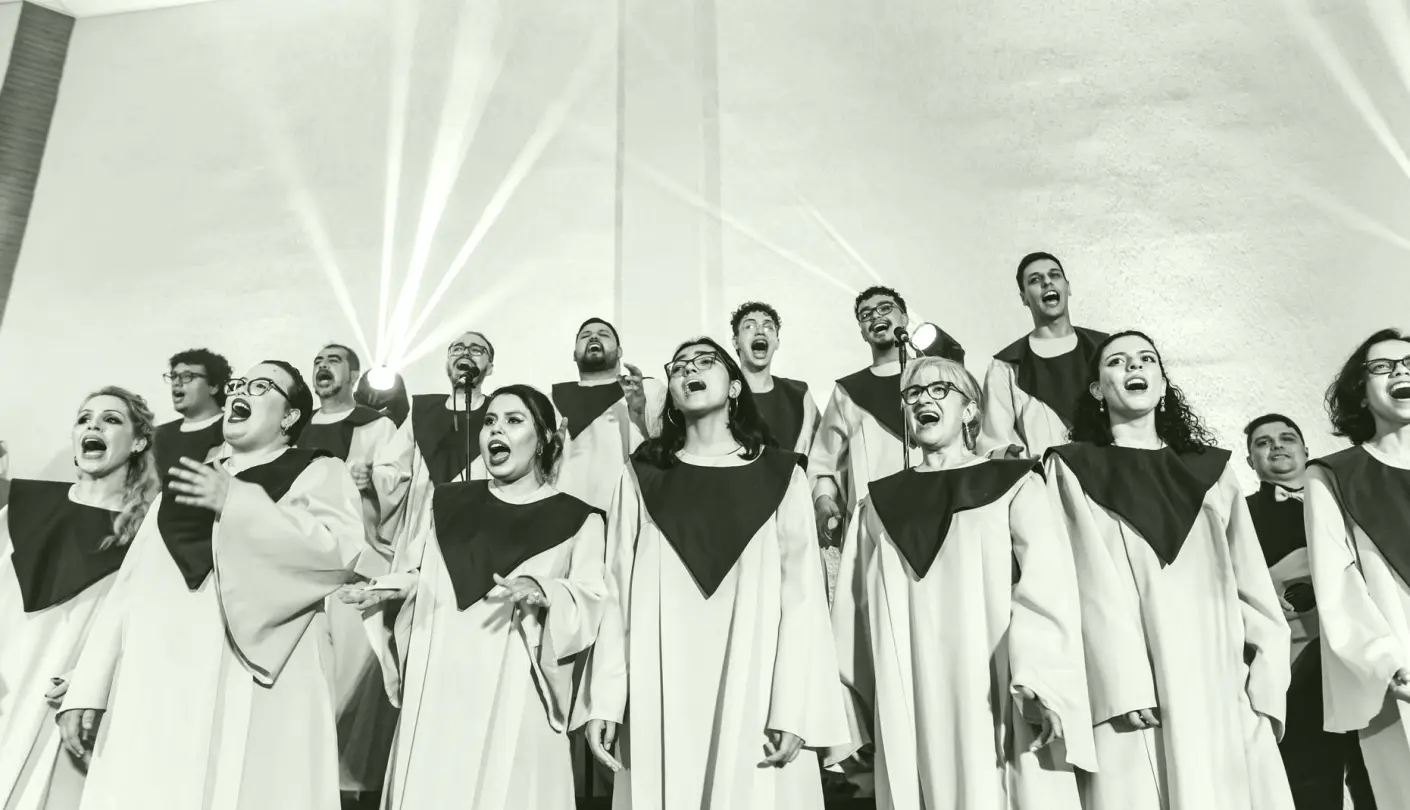
Early in the autumn season, Aled rang us from a community hall outside Swansea. He manages the building and had agreed to film a choir evening for a local broadcast slot. The picture side was fine, he said, but the first test recording sounded like it had been made from the car park. Speech between songs vanished, and the choir swallowed the piano.
I took the call because I usually walk a venue before anyone quotes for it. Aled sent a few phone clips, and even through a small speaker I could hear the room doing most of the damage: a tall, hard-walled space with a stage at one end and a wooden floor that threw every sound back at the microphones.
We agreed that Joanne, our audio engineer, would join me for a visit two evenings before the event. Aled was honest that he had no sound background and mostly wanted to know what to ask for. That suited us, because the useful questions were simple ones about where people stood and where the microphones would sit.
What we found on the walk-through
The hall had a pair of general-purpose microphones on stands in front of the choir, plugged into a small mixer that served the house speakers as well. Everything fed one mix, so any change made for the broadcast also changed what the audience heard. The presenter used a handheld microphone that was also feeding back near the left speaker.
Joanne clapped once in the middle of the floor and we both listened to the tail. It was long, with a slightly boxy ring around the lower mid-range. That explained the muddiness. Placing microphones further from the singers would only invite more of the room into the recording.
We also noticed the piano sat to one side, angled so that its lid pointed away from the choir microphones. That meant the instrument arrived late and thin. None of this needed new equipment first. It needed a plan for placement, a separate feed for the broadcast, and someone listening on headphones.
- Long reverberation from hard walls and a wooden floor
- One shared mix for the house speakers and the recording
- Piano lid facing away from the nearest microphones
- Handheld presenter microphone close to a speaker
Microphone placement before anything else
Joanne moved the choir microphones closer and higher, so they listened down across the front row rather than straight at the faces. A cardioid pattern pointed slightly away from the side walls helped reject the worst of the reflections. We marked the stand positions on the floor with tape, so they could be reset if anyone knocked them during the evening.
For the piano, a pair of microphones went near the open lid, a little back from the hammers, which gave the instrument body without clacking. We kept the pair apart from the choir microphones as far as the stage allowed, because singers and piano bleed into each other quickly in a room like that.
The presenter swapped the handheld for a headset microphone borrowed from our kit, which sat close to the mouth and let us turn it down between announcements. Speech became clear almost at once, and Aled said it was the first time he had heard his own introductions properly.
Separating the broadcast mix from the house
The bigger change was behind the scenes. Rather than one shared mix, we set up a small second mixer whose only job was the feed going to the camera. The house system kept its own balance, tuned for the audience sitting in the room, while Joanne shaped the broadcast for people listening at home on ordinary speakers.
That separation removed the feedback problem too. The presenter could sit comfortably in the house mix without it leaking into a recording that needed to stay clean. Joanne rolled off low rumble from the stage and gently tamed the hall's boxy region with equalisation, rather than reaching for heavy processing.
She listened on closed headphones throughout, checking that the choir sat slightly ahead of the piano in the quiet passages and did not drown it in the loud ones. A compressor with a light setting kept the occasional solo from jumping out. Nothing about it was clever, only careful and repeatable.
The evening itself
On the night, the hall filled earlier than expected, and the extra bodies changed the room again. Coats and people soaked up some of the echo, which helped, though it meant Joanne nudged the choir microphones up a touch during the first song. She had warned Aled this would happen, so nobody was surprised.
I was on the main camera, and with headphones on the shared talkback I could hear the final mix as the viewers would. It was a good reminder of why camera operators benefit from knowing what the sound is doing. When the conductor turned to speak, I knew to stay on him rather than cutting away early.
There was one brief crackle from the headset near the interval, traced to a loose connector. Joanne swapped to the spare pack in under a minute, since a second one had been charged and labelled in advance. The audience barely noticed, and the recording carried on without a gap.
What Aled took away
Afterwards Aled listened to the full recording at his desk and wrote to say he could follow every word of the announcements and hear the piano under the voices. He had expected to need a lot more equipment, and was relieved that most of the improvement came from where things were placed and how the signals were routed.
He now keeps the taped stand positions as a diagram on the hall's noticeboard, along with a short note about which feed goes where. The next group to hire the room can set up in a few minutes without a call to us, which is how we like it to end.
For me, the evening was a useful lesson in starting with the room. Equipment lists are easy to write. Listening to a space first, with a clap and a patient walk around, tells you what the list should actually contain.
Aled's evening shows how much of live sound comes down to ordinary decisions made early: where the microphones stand, what each feed is for and who is listening on headphones. If your venue has a hard room or a shared mixer, a short visit often shows what needs changing, and it is usually less than people fear. Describe your space through the contact page and we will talk it through.