
Before You Book Camera Operators: A Checklist for Live and News Work
Catrin Hughes
6 minutes to read
A practical list of questions to settle on shot types, rehearsal time, communication and kit before you choose camera operators for a bulletin, panel show or live event.
Start with the shots you actually need
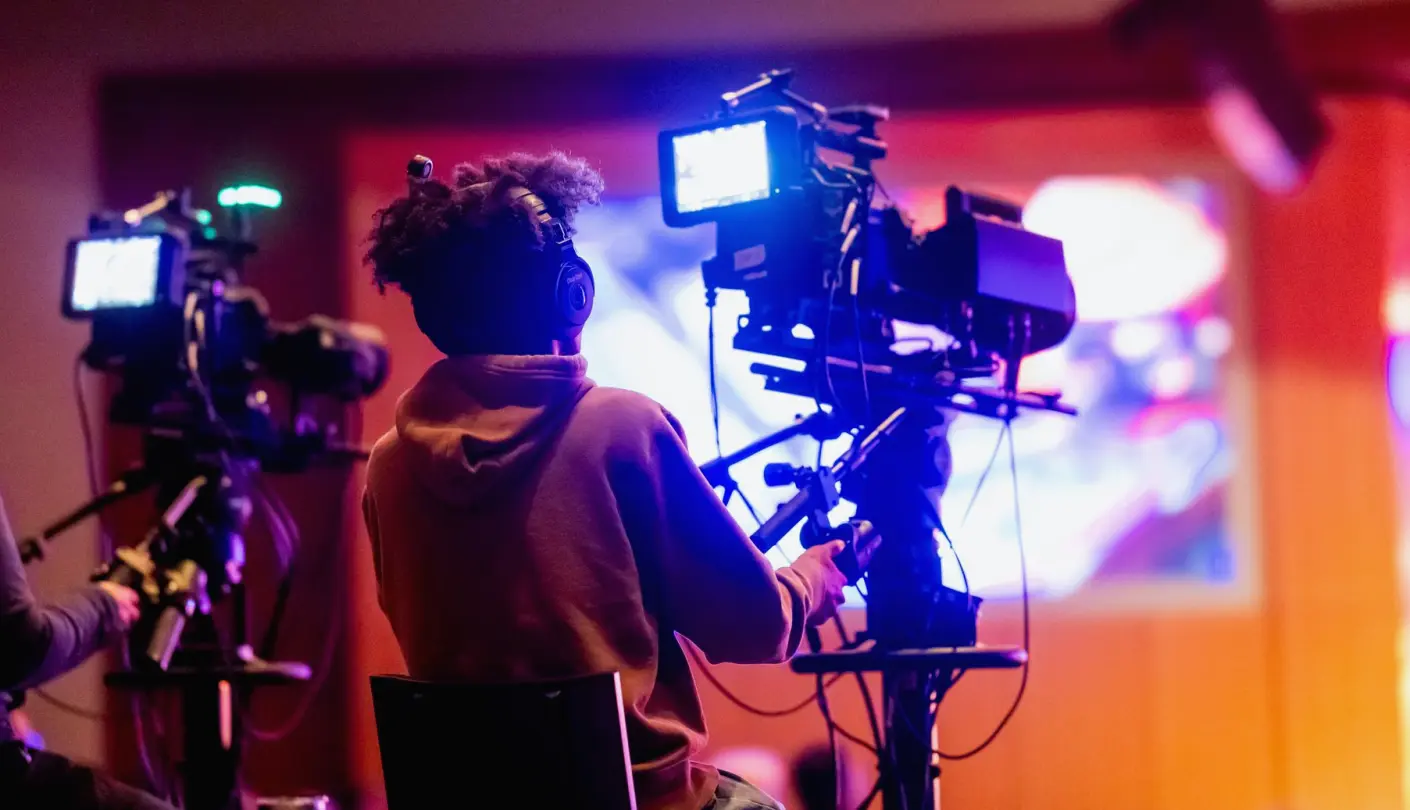
Before anyone is booked, write down what the audience will see. A news bulletin might need a locked wide, a medium on the presenter and a reverse for the guest. A panel show needs something quite different: four or five faces, reaction shots and the occasional cutaway to the audience. The number and type of shots decide how many operators you need, and a vague idea of coverage is the most common reason a booking turns out too thin or too large.
I usually ask a production team to sketch the set from above and mark where each camera would sit. It takes ten minutes and it exposes problems early, such as a desk that blocks a pedestal's path or a guest chair that no lens can reach without crossing another camera.
If the format is still changing, say so plainly when you enquire. An operator can plan around uncertainty, but only if they know it is there.
- List every shot size you expect on air
- Mark camera positions on a plan of the set
- Note any shots that depend on the running order
- Say clearly which parts of the format are still open
Match the equipment to the format
Pedestal, handheld and jib work are different skills, and the right choice follows the programme rather than the other way round. A pedestal camera suits a news desk, where smooth moves and repeatable framing matter more than energy. Handheld suits a roaming reporter or a party night, where closeness and movement carry the shot. A jib adds scale and sweep, which helps a live stage but gets in the way in a small studio.
Check what the floor can take. Jibs need space, a stable base and cable runs that do not cross walking routes. Pedestals need a smooth floor and enough room to track without bumping into lighting stands or monitors.
Ask what is supplied and what is not. Some bookings include the camera and its support, others expect the operator to work on your equipment. Either arrangement is fine when it is agreed in writing before the day.
- Pedestal for desks and fixed news sets
- Handheld for movement, interviews and events
- Jib only where there is floor space and a stable base
- Confirm whose cameras, tripods and cables are used
Ask about experience on your kind of programme
Operating a camera for a scripted bulletin and operating for a live panel are not the same job. The first rewards precision and patience, the second rewards anticipation, because a guest may lean in or turn away without warning. When you speak to an operator, ask what formats they have worked on, how they handle a camera that is suddenly asked to change shot, and how they behave when the director's instructions overlap.
Our own operators, Daniel among them, have worked across news bulletins, festivals and large stage shows, so we can usually say honestly whether a booking suits them. If it does not, we would rather tell you than stretch.
Do not judge only by length of experience. A short conversation about a past difficult shoot, and what the operator did about it, tells you more than a list of titles.
- Which formats have they operated on, live or recorded
- How do they react to a late change of shot
- Have they worked in a space like yours
Plan rehearsal and communication in advance
Most camera problems on air are communication problems that rehearsal would have caught. Ask whether there is time to run the opening, one transition and one awkward moment before going live. Even twenty minutes helps an operator learn where the presenter stops, which guest tends to move and how the director calls shots.
Agree the talkback arrangement early. Operators need a clear intercom line, a shot list or camera script, and a way to flag trouble without interrupting the director. In a busy gallery, a simple rule such as one voice calling shots keeps the floor calm.
If the production uses a run sheet, share it with the operators ahead of time. It is a small courtesy that changes how prepared people look on the day, and it costs nothing to send.
- Allow time for a short rehearsal before transmission
- Confirm intercom and who calls the shots
- Send the run sheet and camera script in advance
Think about the room, the light and the sound
A camera operator works inside a larger system. Lighting decides how forgiving a shot is: a well-lit desk lets the operator hold a tight frame without chasing exposure, while mixed or flickering light makes every move harder. I design lighting for news sets and stages, and I would always rather talk to the operators before the plot is fixed, because their sightlines and positions affect where stands and fixtures can go.
The same applies to sound. A boom or radio microphone that appears in frame, or a camera that blocks a monitor, causes trouble that is cheap to avoid during planning and expensive to solve live.
Walk the space together if you can. Ten minutes on the floor with the operator, the lighting designer and the audio engineer settles questions that emails leave open.
- Check lighting levels and colour consistency on the set
- Keep camera paths clear of stands, cables and monitors
- Agree where microphones and booms may appear
Settle the practical details in writing
The last items on the list are the dull ones, and they matter. Confirm the call time, the length of the booking including set-up and pack-down, any breaks, and what happens if the programme overruns. Ask who is the single point of contact on the day and how last-minute changes are communicated.
Request a written quotation or confirmation that names the operators, the equipment, the hours and the price, so that everyone is working from the same page. Our process is an enquiry through the contact page, a written quotation, then an invoice paid by bank transfer, and cancellations follow the payment and refund policy.
If any answer on this list is unclear, that is the moment to ask again, not on the morning of the shoot.
- Call time, booking length and overrun arrangements
- Named operators and equipment in the confirmation
- One contact person for changes on the day
Choosing camera operators is less about finding the most impressive name and more about matching skills, kit and preparation to the programme you are making. Work through the shots, the equipment, the experience, the rehearsal, the room and the paperwork, and most surprises disappear before the day. If you would like to talk any of it through, send an enquiry through the contact page and we will reply with questions of our own.