
Fixed Cameras or a Roaming Crew: Choosing a Festival Feed
Rhys Pritchard
6 minutes to read
Two ways to film a festival or party night for broadcast, a locked-off camera plan and a roaming crew, set side by side with a clear recommendation for most venues.
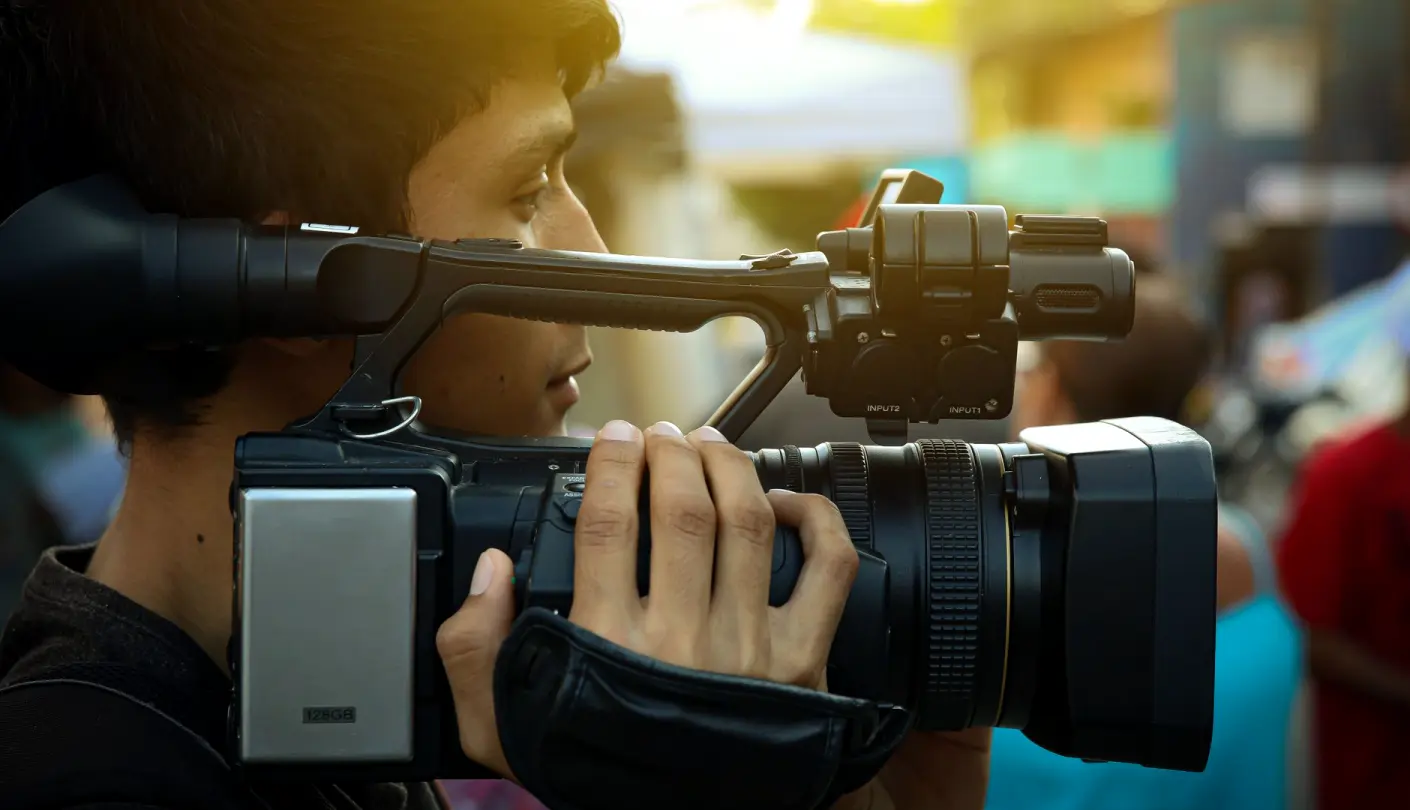
The choice in front of most venue teams
When a venue asks us about filming a concert or party night for broadcast, the conversation usually narrows to two plans. The first is a fixed-camera setup: a handful of cameras on stands or fixed mounts, framed before doors open and left alone. The second is a roaming crew, with operators on handhelds and a jib moving through the room and onto the stage.
Both can produce a feed that is fit to broadcast. They differ in cost, in how much can go wrong, and in what the audience at home actually sees. I have worked on both across many nights, and the honest answer is that neither is better in every room. What matters is the size of the stage, the crowd and the people who must sign off the result.
This note sets the two side by side and ends with the plan I would suggest to most teams asking us about stage and festival broadcast support.
Option one: a fixed-camera plan
A fixed plan suits a defined stage with predictable action. We agree the shots in advance: a wide of the whole stage, a medium on the lead performer, a tight shot on a second position, and perhaps a crowd camera from the back. Each camera is checked during the sound check and then left to run, with the director cutting between them from the control position.
The strengths are real. There are fewer people in the audience area, fewer cables across the floor and fewer chances of a camera wandering into another camera's frame. Costs are lower because fewer operators are needed, and the look stays consistent from the first song to the last.
The weakness is that fixed shots cannot follow anything. If a singer walks to the edge of the stage or a guest appears from the wings, the picture may simply miss it. Over a long night, a locked frame can also begin to feel flat.
- Lower crew numbers and a smaller floor footprint
- Consistent framing that is easy to match with the lighting
- Limited ability to follow movement or react to surprises
Option two: a roaming crew
A roaming crew gives the director movement. Handheld operators can step into the crowd for a reaction shot, a jib can sweep over the audience and settle on the stage, and a pedestal camera at the front can follow a performer from side to side. The result looks closer to a produced concert programme than a recording of an event.
That freedom has a price. Operators in a live room need space, and in a dense crowd that space may not exist without losing paying seats. Every moving camera adds cable management, safety briefings and a person who must be kept out of other shots. The cost is higher, and the quality depends heavily on the experience of each operator.
It also asks more of the planning. Someone has to tell the crew, in plain language and before the show, who covers which performer, who stays still during a quiet song and who moves for the finale.
- Better coverage of movement, reactions and large casts
- Higher cost and more cabling and safety planning
- Greater reliance on experienced operators and clear cues
What decides it for your event
I ask four questions before recommending either plan. How large is the stage, and does the action stay on it? Is the crowd standing or seated, and is there room for operators without losing capacity? Who watches the feed, and do they expect a polished programme or a faithful record of the night? And what budget has the organiser set for the broadcast side?
A seated concert with a modest stage and a streamed audience rarely needs a full roaming crew. A festival night with several acts, a lively floor and a promoter who wants highlights for later use usually does. A party night in a long, narrow room often falls in between, where the layout itself limits what a roaming operator can reach.
Where the answers conflict, we say so and show the trade-off in the written quotation, rather than quietly choosing the cheaper or the more impressive option.
My recommendation: a fixed base with a few moving cameras
For most venues, I suggest a hybrid. Build the plan on three or four fixed cameras that guarantee a clean, repeatable picture of the stage whatever happens. Then add one or two moving positions, typically a handheld near the front and a crowd operator, to supply the movement that makes the feed feel alive.
This keeps the risk low. If a moving camera has a poor moment, the director cuts to a fixed shot and the viewer notices nothing. It keeps the cost between the two extremes, and it asks for fewer operators in the audience area than a full roaming plan.
It also scales sensibly. A small party night can run with the fixed base alone and a single moving operator, while a longer festival bill can add positions without redesigning the whole system. We would agree the exact count with you after seeing the room and the running order.
- Fixed cameras carry the show; moving cameras add colour
- One or two operators in the room are usually enough
- Positions can be added for larger bills
Preparing for the night in these autumn weeks
Autumn brings its own practical points. Venues run more indoor events as the evenings draw in, rooms are often fuller, and load-in windows get shorter between bookings. If you are weighing the two plans now, a site visit before the event saves a great deal of guesswork about sightlines, power and cable routes.
Bring us the running order, the stage plan and a rough idea of crowd numbers, and we will tell you where each camera would sit and what it would cost to cover each performer. Sound and lighting should be discussed at the same time, because a camera position that looks ideal on paper can be spoilt by a lighting stand or a speaker stack.
Finally, agree early who has the final say on the picture during the show. A single decision-maker in the control position keeps a live feed calm.
A fixed-camera plan is steady and economical, and a roaming crew is lively but costs more and asks more of the room. For most stage and festival nights I would start with a fixed base and add a small number of moving cameras. If you are choosing between the two, send us the venue details through the contact page and we will answer with a written quotation.