
Headroom, Lead Room and Safe Areas: Framing Terms Camera Operators Use
Joanne Davies
6 minutes to read
A plain-words guide to the framing vocabulary behind studio camera work, from headroom and looking room to safe areas, and why operators and directors lean on these terms during a live bulletin.
Why a shared vocabulary matters in a live gallery
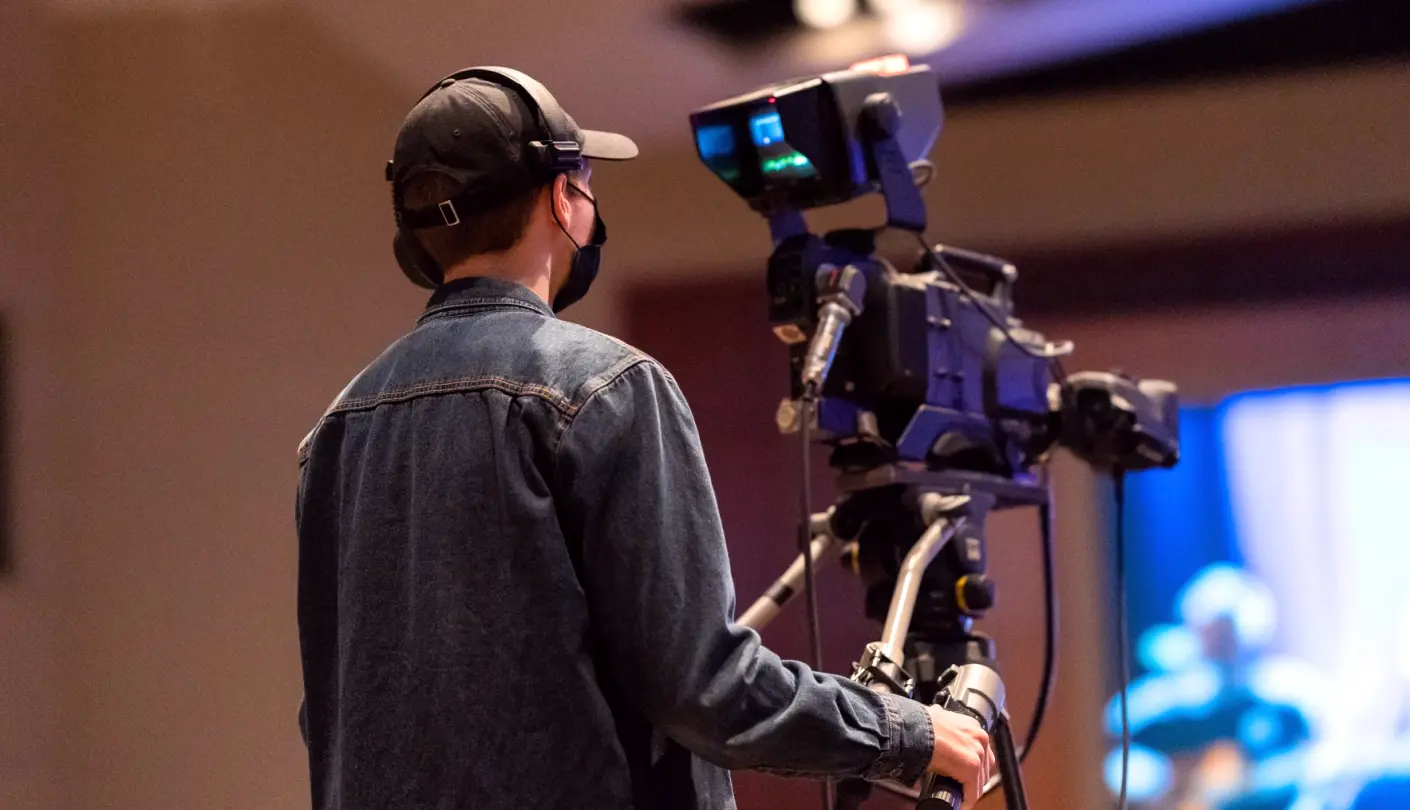
In a live gallery there is rarely time for a long instruction. A director says one short phrase over talkback and the operator is expected to know exactly what to change on the shot. Framing terms exist for that reason: they compress a paragraph of description into a word or two that everyone on the team already understands.
I mix sound rather than operate a camera, but I sit in the same gallery and hear this language through every rehearsal and every bulletin. The terms below are the ones I hear most often when our camera operators work on news programmes, panel shows and filmed events, and they are the ones worth knowing if you are commissioning that work.
Learning them also helps non-technical colleagues. A venue manager or an editor who understands what headroom or looking room means can give feedback in terms the operator can act on straight away, instead of saying a shot feels wrong.
Headroom: the gap above the presenter
Headroom is the space between the top of a person's head and the top edge of the picture. Too little and the presenter looks cramped, as if the frame is pressing down on them. Too much and they seem to be sinking, with a large empty band above them that wastes the picture.
There is no single correct measurement, because it changes with the size of the shot. A tight close-up on a guest leaves very little space above the head, sometimes cropping the top of the hair. A wide shot of a desk leaves noticeably more. What matters is that the amount feels consistent from one shot to the next.
That consistency is the real job. When a director cuts between two cameras on the same presenter, mismatched headroom makes the person appear to jump up or down on the cut. Operators set their frames against each other in rehearsal for exactly this reason.
- Close-up: very little space above the head
- Medium shot: a modest, even gap
- Wide shot: more room, matched across cameras
Looking room and the rule of thirds
Looking room, sometimes called lead room or nose room, is the space in front of a person's face in the direction they are looking or speaking. If a guest is turned slightly towards the presenter, the frame should leave a little more space on that side so they do not appear to be pushed against the edge of the picture.
This ties in with the rule of thirds, the habit of dividing the picture into three vertical and three horizontal bands and placing eyes roughly along the upper line. It is a guide rather than a law, but it gives operators a quick starting point when they set up a shot before the programme begins.
On a two-person interview, the pair of operators usually frame their shots as matching opposites. One guest sits slightly left of centre looking right, the other slightly right looking left, so the cut between them feels natural and the conversation reads clearly on screen.
Safe areas and graphics
The safe area is the part of the picture guaranteed to be visible on any screen. Older displays and some broadcast chains crop the outer edge of the image, so anything important placed too close to the border might be lost. Operators therefore keep faces, hands and key objects inside the safe area.
There is usually a second, tighter zone for text. Captions, name straps and scoreboards are placed inside it so lettering is never clipped. A camera operator framing a shot with a graphic in mind will leave room for a lower-third strap rather than putting the presenter's chest right where the name will appear.
This is where camera work and the graphics operator meet. A short conversation before transmission about where straps will sit saves awkward reframing during the bulletin and keeps the picture clean.
- Keep faces and hands inside the safe area
- Leave space for straps and captions
- Agree graphic positions before the programme
Shot sizes and the language of the cut
Shot sizes have names too. A wide shot shows the whole set or desk, a medium shot takes a person from roughly the waist up, and a close-up fills the frame with the face and shoulders. Directors call these by number or by name, and operators will often be asked to tighten or widen a shot by a small amount.
A two-shot places two people in the frame together, and an over-the-shoulder shot looks past one person at another. On a panel show these combinations let the gallery follow a discussion without leaving the audience unsure who is speaking.
Moves have their own words as well. A pan turns the camera left or right on its own axis, a tilt moves it up or down, and a track or push moves the whole camera on its pedestal. Operators are trained to start and finish moves smoothly, because a jerky move is far more noticeable on air than a slightly imperfect frame.
Putting the terms to use before you commission
If you are planning a studio bulletin or a filmed event, a short conversation about framing saves time on the day. Tell the operators how many speakers there will be, where they will sit, and whether graphics will appear on screen. These facts shape the shots far more than any equipment list.
It also helps to say what kind of picture you want. A brisk news look tends towards tighter, steadier frames with little movement, while a panel show or concert may welcome wider shots and gentle camera moves. Operators can work in either style, but they need to be told which.
During rehearsal, ask to see the cameras matched against each other, particularly on headroom and shot size. A few minutes spent there is worth more than adjustments made once the programme is live, when every correction is seen by the audience.
- State the number and position of speakers
- Describe the look: tight and steady, or wide and flowing
- Check matched frames in rehearsal
Framing terms look like jargon, but each one answers a practical question: how much space above, how much in front, what stays visible and how big the shot is. Once you know them, briefings become shorter and feedback becomes easier to act on. If you are planning a studio or live production and want operators who work in this shared language, get in touch through the contact page and we will talk it through.