
The Tools Behind a Lighting Plot for News Desks and Stages
Joanne Davies
5 minutes to read
A look at the fixtures, meters and drawings we rely on when lighting a news desk or live stage, and why each one earns its place on the rig.
Starting on paper, not on the rig
Every plot we draw begins as a plan view of the studio or stage, with the desk, the presenter positions and the camera angles marked before a single fixture is chosen. This sounds obvious, but a plot built around the lights you happen to own tends to produce shadows in awkward places. Working from the camera positions backwards tells us where the key light needs to come from and how much throw we have.
We keep the drawings simple: a numbered list of fixtures, their positions, the colour temperature and the intended level. Anyone on the crew can pick the sheet up months later and rebuild the same look. That repeatability is what Catrin cares about most, because a news bulletin that looks different on Tuesday from Monday unsettles viewers more than they realise.
Paper also lets a venue manager or producer comment before anything is hung, which is far cheaper than moving a fixture once the grid is loaded.
Fixtures we reach for most often
For news desks we lean on soft sources: LED panels and fresnels with diffusion, chosen for an even wash on faces. Soft light forgives skin and reduces the harsh glare that makes presenters squint under studio heat. Modern LED units also run cool, which matters in a small room where a presenter sits for an hour or more.
Fresnels still earn a place for backlight and set dressing, because their adjustable beam lets us separate a presenter from the background without spilling onto the walls. On a stage we add profile spots with shutters for tight, clean edges around a performer or a banner.
We choose fixtures with stable colour output across their dimming range. A light that shifts warmer as it dims makes matching shots difficult, and the camera will always notice what the eye forgives.
- Soft LED panels for the key light on faces
- Fresnels for backlight and set separation
- Profile spots with shutters for stage edges
- Flags and barn doors to stop spill on screens
Meters, charts and a patient eye
A light meter and a colour temperature meter are the least glamorous items in the flight case, and among the most used. Before a rehearsal we read levels at the presenter's face, the desk surface and the background, then compare them with the plot. If the numbers drift, we correct them before anyone sits down.
We also shoot a grey card and a simple colour chart through the actual cameras. Monitors lie, and so do tired eyes late in a long setup day. A chart gives the vision engineer something fixed to match against, which keeps two cameras from showing two different skin tones.
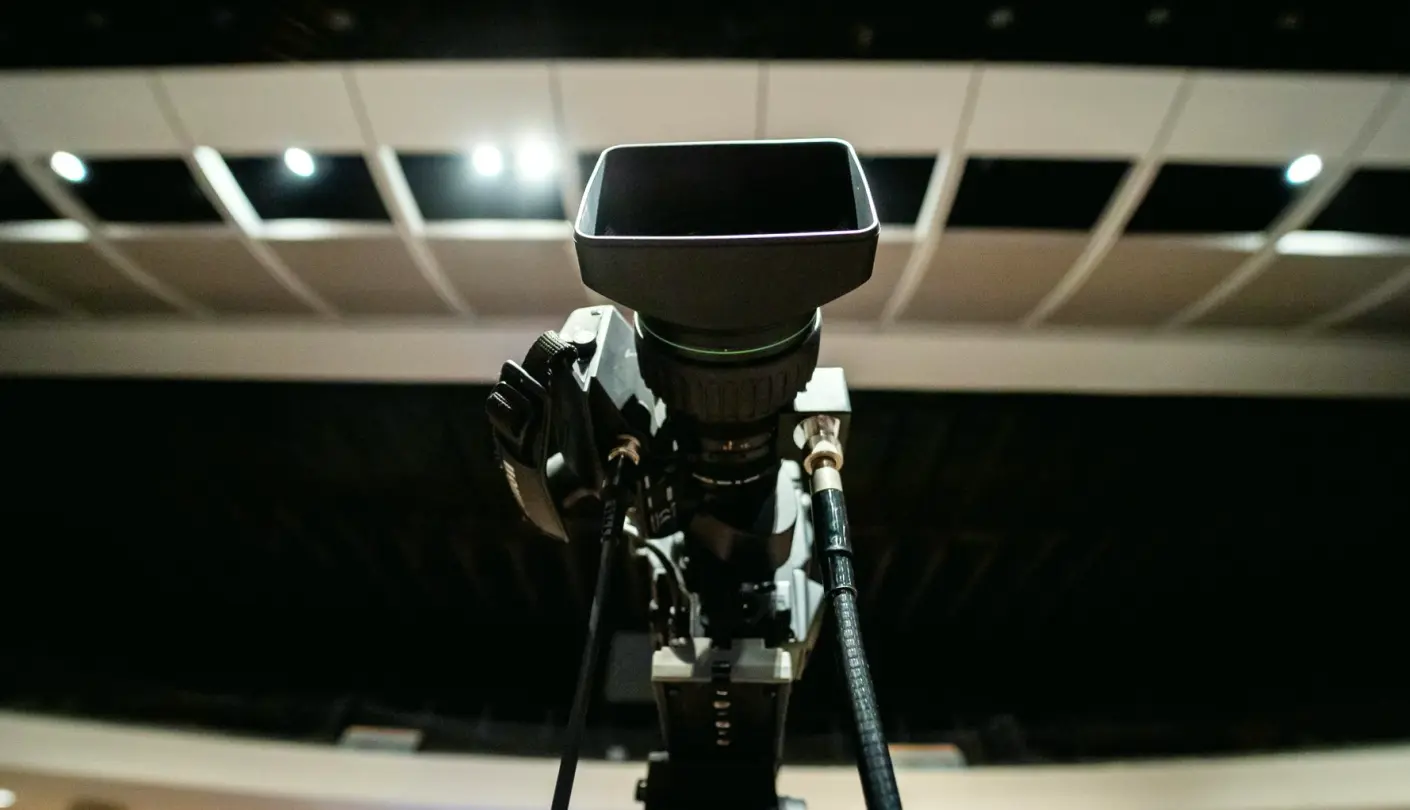
Finally, we walk the set ourselves with a camera on a pedestal, looking for reflections in glasses, glare on glossy desk tops and hot spots on bald heads or polished surfaces.
Materials that keep a look under control
Diffusion gel, flags and black wrap are inexpensive, yet they decide whether a plot looks clean or messy. A sheet of diffusion in front of a key light softens a face at once, and a small flag can pull light off a monitor or a camera lens without moving the fixture.
Colour correction gels let us match daylight spilling from a window or an older tungsten lamp to the rest of the rig. We label every gel and note it on the plot so that the same filter goes back in the same place next time.
Matt paint and fabric on the set matter too. A glossy white panel behind a presenter will throw light straight back into the lens, so we ask the set designer for matt finishes where possible.
- Diffusion gels to soften harsh key lights
- Colour correction gels to match mixed sources
- Black wrap and flags to control stray light
- Matt surfaces on set to avoid reflections
Dimming, control and cue lists
A lighting desk is only as useful as the preparation behind it. For a news set we usually program a handful of states: a standard bulletin look, a tighter look for a single presenter, and a brighter wash for rehearsal and clean-up. Each is stored as a numbered cue, so the operator never has to build a look from scratch live.
On a live stage the cue list follows the run sheet, and we talk it through with the director and the other departments beforehand. Lighting changes that surprise the camera crew or the sound team cause more trouble than any equipment fault.
We keep a written record of every cue and level, and Joanne, who mixes sound in the same control area, often sits beside the lighting operator so that both desks stay in step with the show.
Choosing methods for the room you have
Not every studio can take a full rig. A small regional newsroom with a low ceiling needs compact, cool-running fixtures and careful cable routing, while a large venue stage can carry heavier units on a truss. We adapt the toolkit to the building, not the other way around.
Power capacity is a quiet constraint that shapes many decisions. Counting the load before we arrive prevents tripped breakers, and LED fixtures help here because they draw far less than older lamps.
We would rather propose a modest, reliable plot that the in-house team can maintain than an elaborate one that only works while we are on site.
A good lighting plot is the sum of ordinary things done carefully: a clear drawing, soft sources, honest meters, labelled gels and cues that someone else can read. None of it is dramatic, and viewers should never notice it. They should simply see a presenter who looks natural and a picture that stays steady from one bulletin to the next.